



HCN Channel
Hyperpolarization activated cyclic nucleotide gated channels
Hyperpolarization- and Cyclic Nucleotide-gated (HCN) channels are a family of six transmembrane domain, single pore-loop, hyperpolarization activated, non-selective cation channels. The HCN family consists of four members (HCN1-4). HCN channels represent the molecular correlates of I(h), a hyperpolarization-activated current best known for its role in controlling heart rate and in the regulation of neuronal resting membrane potential and excitability.
HCN channels are unique among vertebrate voltage-gated ion channels, in that they have a reverse voltage-dependence that leads to activation upon hyperpolarization. HCN channels are encoded by four genes (HCN1-4) and are widely expressed throughout the heart and the central nervous system.
All Product Categories
-
HCN Channel Related Products (41)
Related Products (41)

-
Rp-8-Br-cGMPS sodium
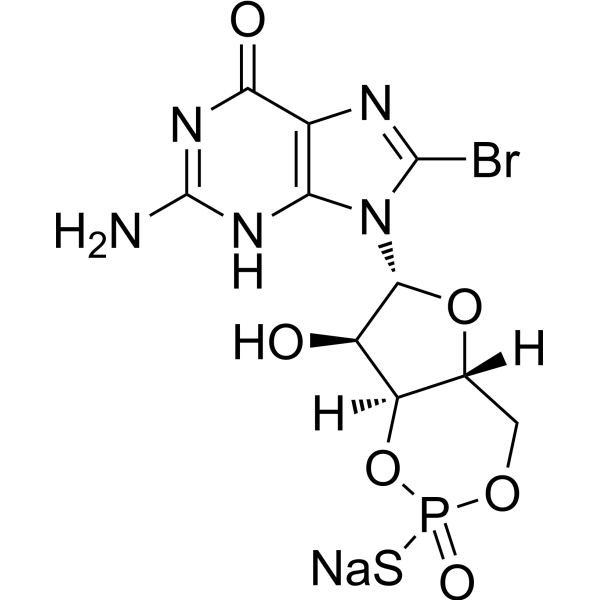 0 ImagesSynonyms: Rp-8-bromo-Cyclic GMPS sodium
-
Mulberroside C
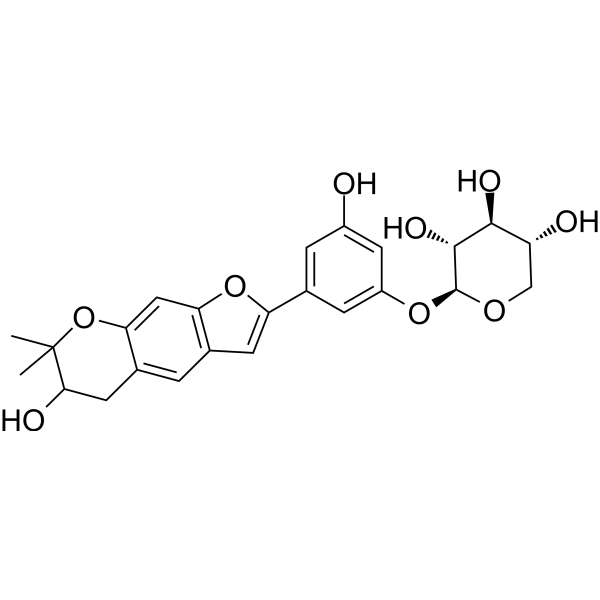 0 ImagesMulberroside C is one of the main bioactive components in white mulberry (Morus alba L.). Mulberroside C exhibits antiplatelet, antiviral and neutrophil-regulating activities, and binds to EV-A71 VP1 with a Kd value of 1.289 nM. Mulberroside C reduces the phosphorylation level of ERK, promotes the phosphorylation of IP3RI at the Ser1756 site, and decreases calcium influx and calcium mobilization. Mulberroside C inhibits the expression of P-selectin (P-selectin). Mulberroside C upregulates the cyclic nucleotide signaling pathway in human platelets. Mulberroside C binds to IL-23R, upregulates the expression of G-CSF, GM-CSF and RASGRP1, and activates the RAS/ERK signaling pathway. Mulberroside C promotes neutrophil maturation, accelerates the recovery of leukopenia, and enhances the antibacterial activity of neutrophils. Mulberroside C inhibits the replication of hepatitis C virus in replicon cells. Mulberroside C prevents the uncoating and genome release of EV-A71, and inhibits the synthesis of viral proteins and RNA. Mulberroside C can be used in studies related to thrombosis-mediated cardiovascular diseases, chemotherapy- and radiotherapy-induced leukopenia, hepatitis C virus infection, and hand, foot and mouth disease.
-
Norquetiapine dihydrochloride
 0 ImagesSynonyms: N-Desalkylquetiapine dihydrochlorideNorquetiapine ( N-Desalkylauetiapine) dihydrochloride, a metabolite of Quetiapine (HY-14544), is a selective HCN1 channel inhibitor, with an IC50 of 13.9 μM. Norquetiapine dihydrochloride selectively inhibits noradrenaline reuptake, is a partial 5-HT1A (Ki = 45 nM) receptor agonist, and acts as an antagonist at presynapticα2 (Ki = 237 nM), 5-HT2C(Ki = 107 nM), and 5-HT7 (Ki = 76 nM) receptors. Norquetiapine dihydrochloride blocks the human cardiac sodium channel Nav1.5 in a state-dependent manner. Norquetiapine dihydrochloride shows partial anti-inflammatory effects in LPS (HY-D1056) injected C57BL/6 mice. Norquetiapine dihydrochloride can be used for the study of depression and inflammation.
-
Ivabradine-d3 hydrochloride
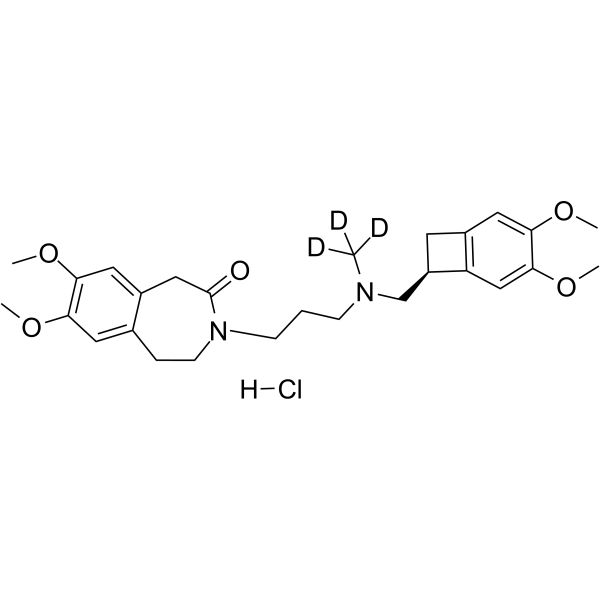 0 ImagesCat. No.: HY-B0162AS1CAS No.: 1217809-61-4Ivabradine-d3 (hydrochloride) is the deuterium labeled Ivabradine hydrochloride. Ivabradine hydrochloride is a new If inhibitor with IC50 of 2.9 μM, and used as a pure heart rate lowering agent.
-
KIO-301 chloride
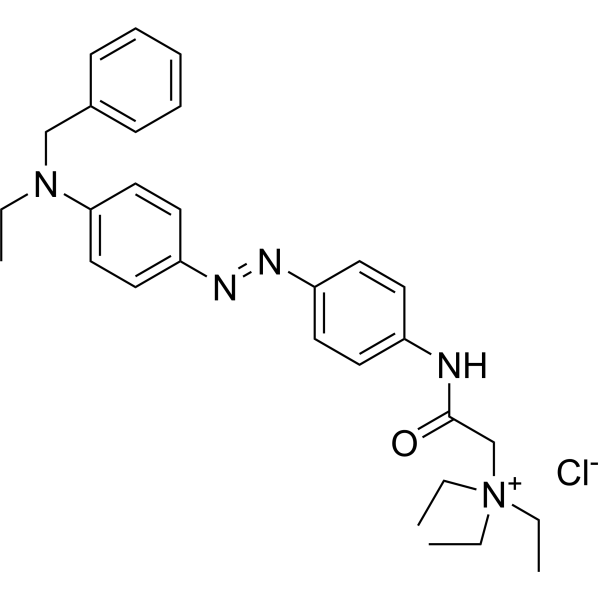 0 ImagesCat. No.: HY-161092CAS No.: 1643463-59-5KIO-301 chloride is an azobenzene photoswitch compound that can block voltage-gated ion channels, including hyperpolarisation-activated cyclic nucleotide-gated (HCN) and voltage-gated potassium channels during exposure to visible light.
-
HCN2-IN-4
 0 ImagesCat. No.: HY-186061CAS No.: 3080809-13-5HCN2-IN-4 is an orally active HCN2 ion channel inhibitor, with an IC50 of 3 nM. HCN2-IN-4 inhibits the activity of HCN2 ion channels. HCN2-IN-4 can be used in the research of pain, tinnitus and central nervous system diseases.
-
Ivabradine-d6
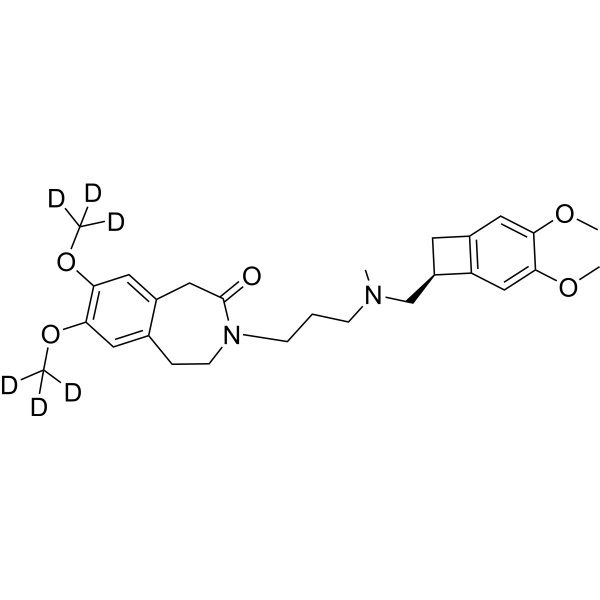 0 ImagesCat. No.: HY-B0162SCAS No.: 2070009-62-8Ivabradine-d6 is the deuterium labeled Ivabradine. Ivabradine is a potent and orally active HCN (hyperpolarization-activated cyclic nucleotide-gated) channel blocker that inhibits the cardiac pacemaker current (If). Ivabradine reduces dose-dependently heart rate without modification of blood pressure. Ivabradine shows anticonvulsant, anti-ischaemic and anti-anginal activity.
-
HCN2-IN-2
 0 ImagesCat. No.: HY-186066CAS No.: 3080808-99-4HCN2-IN-2 (Compound 35), azaindazole derivative, is a selective HCN2 inhibitor with an IC50 of 145 nM. HCN2-IN-2 inhibits HCN2 channel activity blocks abnormal firing of peripheral nociceptive neurons. HCN2-IN-2 can be used for the research of pain.
-
Ivabradine sulfate
 0 ImagesCat. No.: HY-B0162BCAS No.: 1202000-62-1Ivabradine sulfate is a potent and orally active HCN (hyperpolarization-activated cyclic nucleotide-gated) channel blocker that inhibits the cardiac pacemaker current (If). Ivabradine sulfate reduces dose-dependently heart rate without modification of blood pressure. Ivabradine sulfate shows anticonvulsant, anti-ischaemic and anti-anginal activity.
-
HCN2-IN-1
 0 ImagesCat. No.: HY-186065CAS No.: 3080808-96-1HCN2-IN-1 (compound 32) is a HCN2 inhibitor with the IC50 of 98 nM. HCN2-IN-1 can be used for the research of central nervous system (CNS) and psychiatric disorders.
-
HCN2 modulator-6
 0 ImagesCat. No.: HY-186060CAS No.: 3080809-10-2HCN2 modulator-6 is a HCN2 ion channel inhibitor has an IC50 of 7 nM. HCN2 modulator-6 inhibits HCN2 ion channel activity. HCN2 modulator-6 can be used for the research of pain, inflammatory pain, neuropathic pain, tinnitus, central nervous system disorders, psychiatric disorders, mood disorders.
-
KIO-301
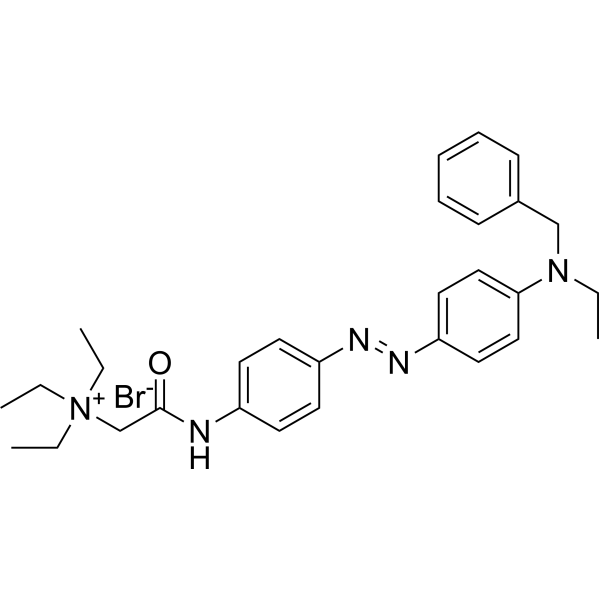 0 ImagesCat. No.: HY-160209CAS No.: 1643463-61-9KIO-301 is a photoswitchable HCN channel blocker, and can be used as the vitreous “light switch” molecule that reactivates retinitis pigmentosa.
-
HCN2-IN-5
 0 ImagesCat. No.: HY-186057CAS No.: 3080808-86-9HCN2-IN-5 is a HCN2 ion channel inhibitor with an IC50 of 9 nM. HCN2-IN-5 shows weak inhibitory activity for HCN4. HCN2-IN-5 can be used for the research of inflammatory disease and neurological disorders.
-
CP-339818
 0 ImagesCat. No.: HY-114540CAS No.: 185855-91-8CP-339818 is a non-peptide Kv1.3 channel (IC50 = 200 nM) and Kv1.4 channel blocker. CP 339818 inhibits HCN channel with IC50s of 18.9 μM and 43.4 μM against HCN1 and HCN4 (high Cl-). CP-339818 has significantly weaker blocking effects on Kv1.1, Kv1.2, Kv1.5, Kv1.6, Kv3.1-4, and Kv4.2 channels. CP-339818 selectively blocked Kv1.3, thereby inhibiting the activation process of human T cells. CP-339818 can be used to study the physiological functions of HCN and Kv channels.
-
Tyrene
 0 ImagesCat. No.: HY-W097929CAS No.: 87-40-1Synonyms: 2,4,6-TrichloroanisoleTyrene (2,4,6-Trichloroanisole) is an off-flavor compound, cyclic nucleotide-gated (CNG) channel inhibitor, and olfactory transduction attenuator. Tyrene is formed by microbial O-methylation of 2,4,6-trichlorophenol. Tyrene inhibits channel activity in olfactory receptor cells by partitioning into the plasma membrane lipid bilayer, and also suppresses odorant- and cAMP-induced currents in individual olfactory receptor cells. Tyrene causes cork taint in wine. Tyrene also produces off-flavors in potato chips, dried fruits, coffee, and drinking water.
-
Zatebradine hydrochloride (Standard)
 0 ImagesSynonyms: UL-FS-49 (Standard); UL-FS-49CL (Standard)Zatebradine (hydrochloride) (Standard) is the analytical standard of Zatebradine (hydrochloride). This product is intended for research and analytical applications. Zatebradine (UL-FS-49 (free base)) is a potent inhibitor of hyperpolarization-activated cyclic nucleotide-gated (HCN) channels with an IC50 values 1.96 μM. Zatebradine blocks the slow inward current through human HCN1, HCN2, HCN3 and HCN4 channels, with IC50 values of 1.83 μM, 2.21 μM, 1.90 μM and 1.88 μM, respectively.
-
Ivabradine hydrochloride (Standard)
 0 ImagesIvabradine hydrochloride (Standard) is the analytical standard of Ivabradine hydrochloride. This product is intended for research and analytical applications. Ivabradine hydrochloride is a potent and orally active HCN (hyperpolarization-activated cyclic nucleotide-gated) channel blocker that inhibits the cardiac pacemaker current (If). Ivabradine hydrochloride reduces dose-dependently heart rate without modification of blood pressure. Ivabradine hydrochloride shows anticonvulsant, anti-ischaemic and anti-anginal activity.
-
Sp-8-Br-cGMPS
 0 ImagesCat. No.: HY-137639CAS No.: 153660-03-8Sp-8-Br-cGMPS is an analog of cGMP. Sp-8-Br-cGMPS is an agonist for cGMP-gated cation channels (CNG channels), with an EC50 of 106.5 μM. Sp-8-Br-cGMPS induces the currents, without the ability to stabilize the channel open state as a full agonist.
-
8-Pcpt-cGMP
 0 ImagesCat. No.: HY-137016CAS No.: 54364-02-28-Pcpt-cGMP is an agonist for cyclic nucleotide-gated (CNG) channel with an EC50 of 0.5 μM. 8-Pcpt-cGMP exhibits good membrane permeability. 8-Pcpt-cGMP can be used in studies about the function of CNG channels in visual signal transduction and olfactory transduction.
-
Rp-8-Br-cGMPS
 0 ImagesCat. No.: HY-135110ACAS No.: 150418-07-8Synonyms: Rp-8-bromo-Cyclic GMPS



